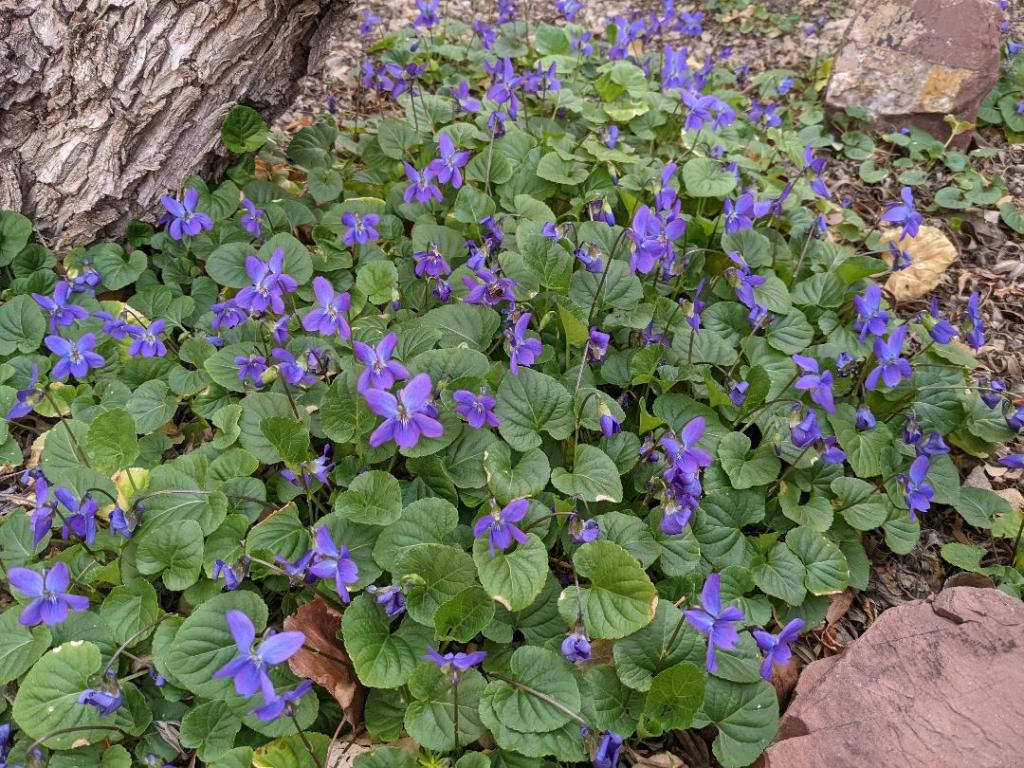
The violets are in full bloom now. They always remind me of St. Therese of Lisieux. In The Story of a Soul, she uses the analogy of violets to represent all the little souls who give God joy as they strive to love Him in their everyday lives. In God’s garden, these little souls do not demonstrate the splendor of the rose or the whiteness of the lily, but they give God joy as his glance falls upon their simple beauty.
The color of violets is the color of Lent. This is a solemn season. We try to ponder the unimaginable gift that Jesus has given us in his passion. We can’t fully appreciate it or understand it. After all, we are only little souls, little violets in the face of such a Mystery.
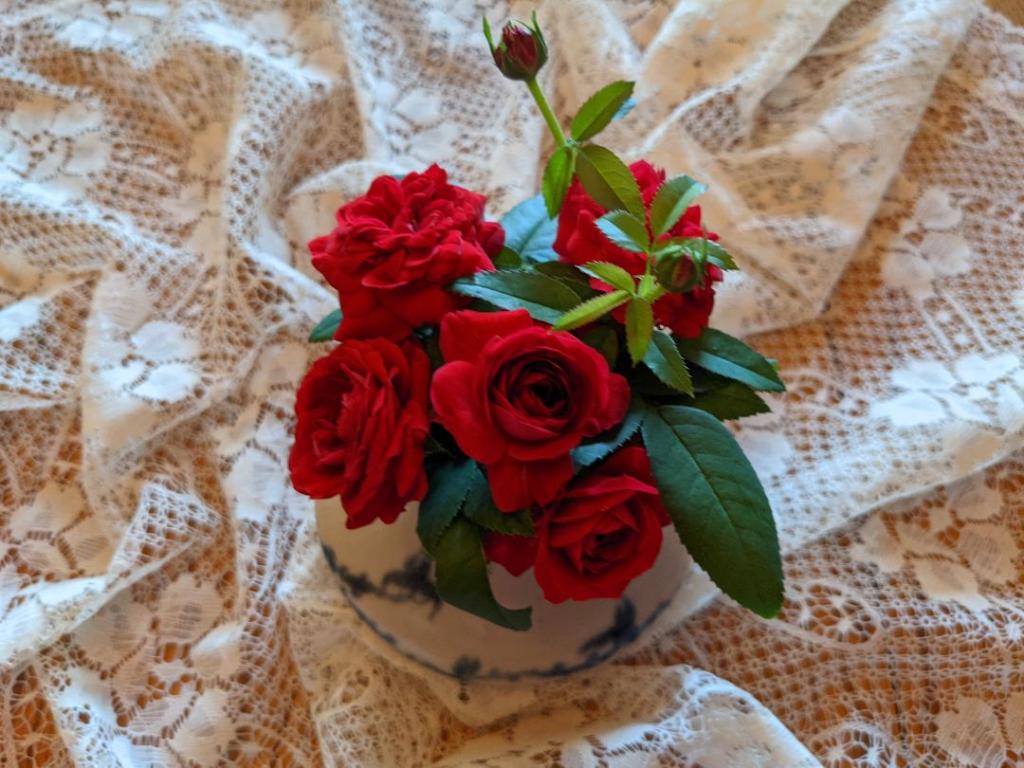
“Listen to me, my faithful children, and blossom like a rose growing by a stream of water.
      “Send out fragrance like incense, and put forth blossoms like a lily.  Scatter the fragrance, and sing a hymn of praise; bless the Lord for all his works.”  (Sir. 39:13-14, NRSV Catholic Ed.)
I love this passage from the book of Sirach. God seems to be saying that I can be more than I am in the present moment, more than I can desire or even imagine. This resonates in my heart, and I believe it is true. I want to be like the rose or the lily that gives off a lovely fragrance to the world. I want my life to be a hymn of praise that blesses the Lord who made me and who sustains my life.
At the same time, I am aging. I see an old woman in the mirror. I am not as strong as I used to be. There are more years behind me than before me. Yet my desire to become something more is as strong and vigorous as if I were a young woman with my whole life ahead of me.
St. Therese of Lisieux wanted to be a saint, and at the same time, she was realistic about her limitations and her situation. She didn’t think she was made of the stuff of great saints (although it turned she was), but she believed God would not have given her the desire to become a saint unless it was possible for her to achieve that goal.
I can’t compare myself to St. Therese, but I may still have something beautiful to offer to the world. I may still have some unopened petals, but in order for them to open, I need to remain near the stream of running water. For me, that stream is the mysterious life that flows from the opened side of the Savior, from the side of the one who gave his life for me so I could have life, so I could be life in myself and for others.
At the end of my life on earth, when my last petal has fallen to the ground, I hope to enter into a greater life, an eternal life with the Lord who has loved me so dearly in this earthly life of preparation. I look forward to being with him forever in that abundant life – ever fresh, ever radiant, ever blessed.
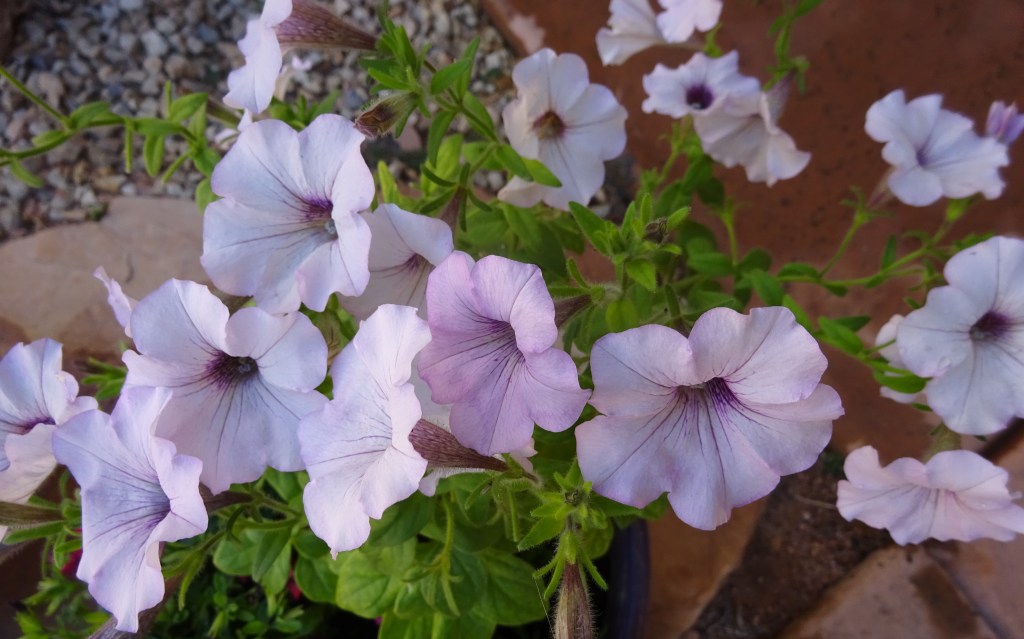
Although I love to look at pictures of exotic gardens with unusual plants, my own garden is a humble garden. I am content with geraniums, nasturtiums, lobelia, and of course, the humble petunia. The one pictured above is a survivor. I planted it last year, and it survived the winter down to 18° F. It didn’t grow during the cold season, but it remained green, and as soon as spring came, it grew so tall and blossomed so abundantly that it became top heavy and I had to cut it back almost to the ground. Undeterred, it is growing again, promising to be as prolific as ever. It reminds me of a quote by St. Therese of Lisieux: “The brilliance of the rose and the whiteness of the lily do not lessen the perfume of the violet or the sweet simplicity of the daisy….If all the lowly flowers wished to be roses, nature would lose its springtide beauty, and the fields would no longer be enameled with lovely hues….” (From The Story of a Soul)
 Contemplation Garden